The kernel is the core component within an operating system. Operating systems such as Linux employ kernels that
allow users access to the computer seemingly simultaneously. Multiple users can execute multiple programs apparently
concurrently.
Each executing program is a task (or thread) under control of the operating system. If an operating system can execute
multiple tasks in this manner it is said to be multitasking.
The use of a multitasking operating system can simplify the design of what would otherwise be a complex software
application:
- The multitasking and inter-task communications features of the operating system allow the complex application to be partitioned
into a set of smaller and more manageable tasks.
- The partitioning can result in easier software testing, work breakdown within teams, and code reuse.
- Complex timing and sequencing details can be removed from the application code and become the responsibility of the operating system.
See also the FAQ "Why use an RTOS?".
Multitasking Vs Concurrency
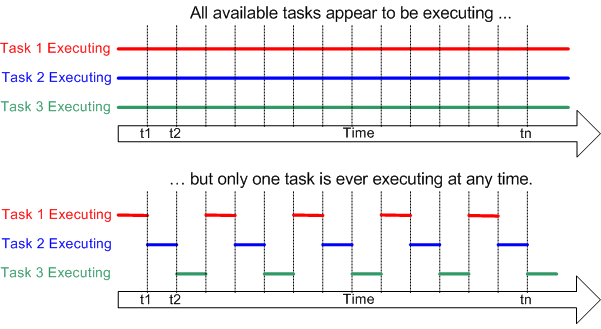
A multitasking operating system can create the illusion of concurrent execution by rapidly switching between tasks,
even though a single core processor can only execute one task at a time. This is
depicted by the diagram below which shows the execution pattern of three tasks with respect to time.
The task names are color coded and written down the left hand. Time moves from left to right, with the colored
lines showing which task is executing at any particular time. The upper diagram demonstrates the perceived concurrent
execution pattern, and the lower the actual multitasking execution pattern.
Next: RTOS Fundamentals - Scheduling
Copyright (C) Amazon Web Services, Inc. or its affiliates. All rights reserved.